Where the antler comes from
Antler is not horn. A horn — on a bull or a ram — is permanent and grows for life. Antler is bone, and every year a deer grows a fresh set and drops the old one.
It happens after the autumn rut. Testosterone falls, a thin layer of cells at the base dissolves the join, and the antler simply comes away. Whitetail drop theirs between January and March, elk from February to April. Come spring the woods are full of them, and people walk those woods looking — it is a hobby with its own name, shed hunting, and its own dogs trained to find them.
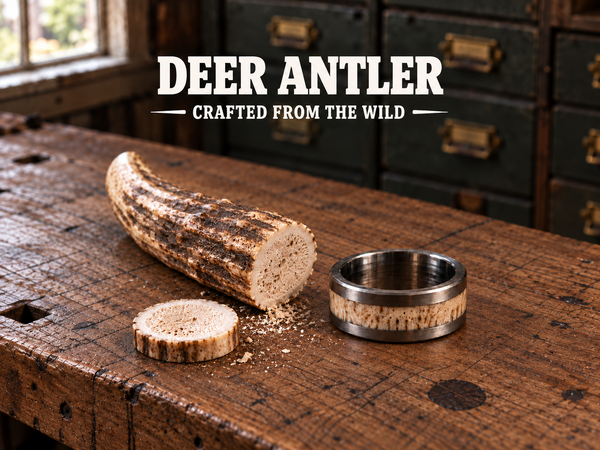
That is our material. Nothing is hunted for these rings.
Brown antler and white
Collectors sort sheds into two grades. Brown antler was dropped that season — dense, warm in colour, still carrying the marks of the tree it was rubbed against. White antler has sat through a winter or two, bleached by sun and gone chalky. White crumbles under a cutting wheel, so we work with brown.
Nothing is lost to the forest either. Rodents gnaw sheds for the calcium, and an antler left where it fell is gone within a couple of years.