

Do Wood Rings Get Ruined by Water? Care Guide
Short answer: no, not from everyday water. The wood in a HeyWhiskey ring is stabilized before it ever reaches a ring, and stabilized wood shrugs off rain, handwashing and sweat the same way the tungsten or steel around it does. What it doesn't shrug off is soaking — a swim, a shower, a long bath, a hot tub. That's the one habit worth building, and this guide covers why, plus what actually happens if you skip it.
It's not a solid wood ring
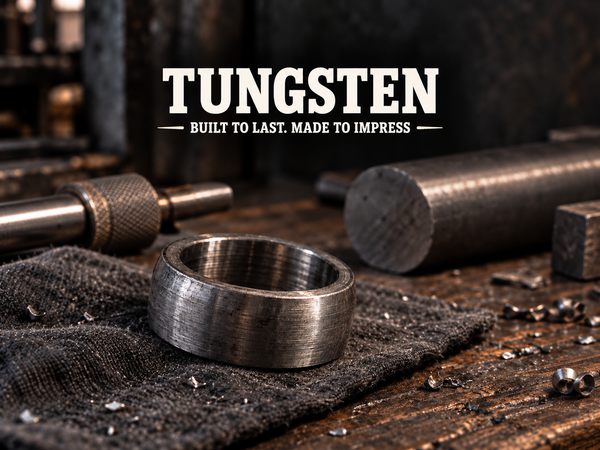
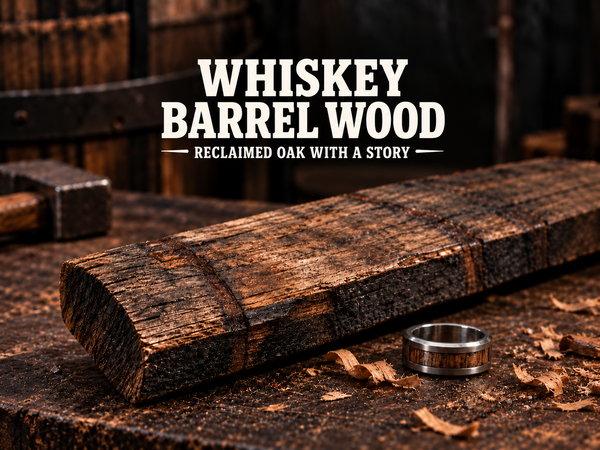
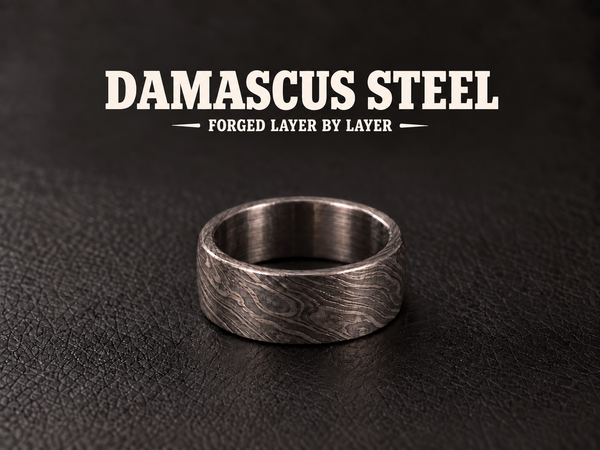
Worth clearing up first, because it changes how you should think about the water question. A HeyWhiskey barrel wood ring isn't carved from a solid block of wood. It's built on a metal core — tungsten carbide on most designs, Damascus steel on a few — with a band of reclaimed whiskey-barrel oak set into it as an inlay. The wood gives you the grain, the color, the bit of whiskey history. The metal gives you the structure.
That matters for water because a solid wood ring and a wood inlay behave differently. A solid wood band has grain running all the way through it, so it can warp or split unevenly if it takes on moisture. An inlay is a thin, stabilized strip bonded into a metal frame — there's simply less wood there, and the metal around it isn't going anywhere.
What "stabilized" actually means
Stabilization is a real, fairly common process in wood jewelry and knife-handle making: the wood is dried out and then impregnated with a resin under vacuum or pressure, so the resin fills the pores that would otherwise soak up water. Once that's done, the wood is harder, more color-stable, and far less reactive to humidity than it was in its raw state.
That's the step HeyWhiskey uses before wood ever becomes part of a ring. It's also why you won't see a bottle of wood oil in the box — stabilized wood doesn't need periodic oiling the way a raw wood item might, because the resin has already done that job from the inside.
What's fine, and what isn't
Day to day, a stabilized wood inlay handles the same things the rest of the ring does:
Fine: rain, snow, handwashing, doing the dishes for a few minutes, sweat at the gym, a splash while cooking.
Not fine: showering, swimming, a hot tub, a sauna, or any long soak where the ring is underwater for an extended stretch.
The difference is exposure time, not water itself. A few seconds of contact and a quick dry-off is nothing. Twenty minutes underwater, repeated often enough, is a different story — and that's true for most jewelry, not just wood. It's also worth taking the ring off before applying lotion, sunscreen or hand sanitizer directly to it; those sit on the wood longer than plain water does.

What actually happens if it gets soaked
Prolonged soaking is the thing stabilization doesn't fully protect against. Over time, repeated soaking can let a small amount of moisture reach the wood under the sealed surface, and the wood can respond the way wood does: the grain lifts slightly, the inlay can separate from its channel, or the color deepens or shifts unevenly. None of that happens from a single shower. It's a cumulative thing, tied to how often the ring is submerged and dried out again over months and years.
This is also the exact line where the warranty draws its distinction. An inlay that lifts or cracks on its own, with no external cause, is a stabilization failure and it's covered for life. An inlay that lifts because it's been swum in for a year is wear from water exposure, and that part isn't covered — the same way a watch's warranty won't cover water damage after you've taken a splash-resistant watch swimming.
The one habit that covers it
You don't need a maintenance routine for a stabilized wood ring. You need one habit: take it off before anything that counts as soaking — showering, swimming, the hot tub, the sauna — the same way you'd take off any ring with a bonded inlay or a plated finish. If it gets rained on or splashed, a quick wipe with a dry cloth is all that's needed. Store it somewhere it can actually dry out between wears, rather than in a sealed damp bag.

What the warranty covers
Every HeyWhiskey ring carries a lifetime warranty against manufacturing defects, and that includes the wood: if an inlay separates, lifts or cracks on its own under normal wear, that's covered for as long as you own the ring. What it doesn't cover is damage from soaking, heat or chemicals, and it doesn't cover the natural way the grain and color of a piece of wood vary from ring to ring — that variation is the material, not a flaw. Full terms are on our warranty policy page, and the short version is in our FAQ.
What about antler and meteorite rings?
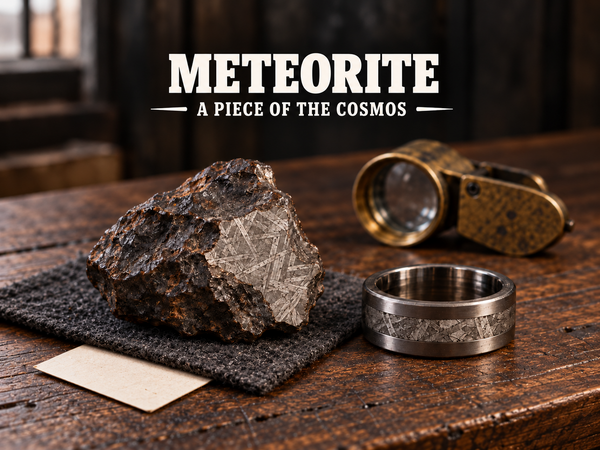
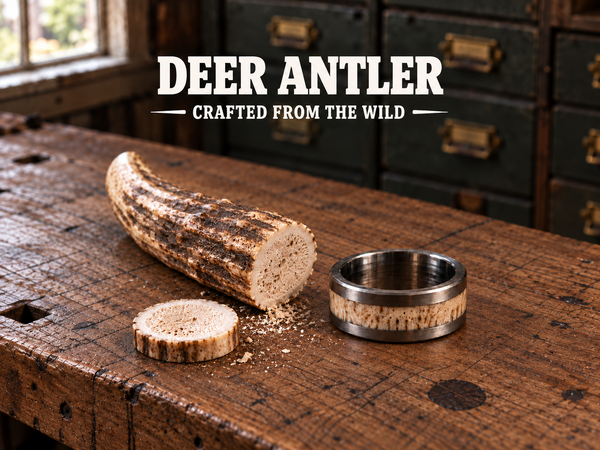
The same logic applies to our deer antler rings: antler is a natural inlay, stabilized and sealed the same way the barrel wood is, and the same everyday-versus-soaking line applies. Meteorite rings are a different material with iron in it, so the concern there is more about oxidation than swelling, but the practical advice is the same either way — fine for daily wear, off before you swim.
Common questions
Can I wear my ring in the shower on my honeymoon?
Not ideally, no — a shower is exactly the kind of repeated soaking that stabilization doesn't fully protect against over time. Leave it on the counter for the five minutes it takes.
I forgot and swam in it once. Is it ruined?
Almost certainly not. One swim isn't the same as a habit. Dry it off, let it air out for a day, and keep an eye on it going forward. The risk is cumulative, not immediate.
Does it need oiling like a wooden cutting board?
No. That's the point of stabilization — the resin already fills the pores that oil would otherwise be filling in on raw wood.
Will the color change over time even if I never soak it?
Some gradual deepening of color is normal for any real wood, soaked or not, and it isn't a defect — it's part of what "no two rings are identical" actually means over years of wear.
What if the inlay lifts on its own?
Email info@heywhiskey.ca with your order number and a couple of photos. If it lifted with no external cause, it's covered under the lifetime warranty and we'll repair or replace it.
A HeyWhiskey wood ring is built to be worn every day, not treated like something fragile — the metal core and the stabilized wood are both doing their job as long as you skip the pool and the shower. Browse the full whiskey barrel ring collection, or read more in the Journal.